Most sellers have no idea what they’re actually paying to sell their home until they see the settlement statement. By then, it’s too late for anything but shock. On Utah’s average $523,000 sale, the true cost to sell a home typically runs between $45,000 and $65,000—roughly 9-12% of the sale price walking out the door in fees, commissions, and closing costs. That’s not a typo. And most of it is negotiable.
Understanding where that money goes is the first step toward keeping more of it. The second step is knowing which costs are fixed, which are variable, and where smart sellers are finding significant savings without sacrificing results.

Breaking Down the Real Numbers
Let’s walk through a typical Utah transaction on a $523,000 home. Traditional real estate commissions at 5-6% run $26,150 to $31,380. Title insurance and escrow fees add $2,000-$3,500. Recording fees, transfer taxes, and miscellaneous closing costs contribute another $1,000-$2,000. If you’re paying off a mortgage, any prorated interest and potential prepayment penalties factor in.
Then there’s the preparation side: staging costs if you choose that route ($1,500-$5,000), pre-listing repairs that buyers would otherwise negotiate ($2,000-$10,000+), professional cleaning ($300-$500), landscaping touch-ups ($500-$2,000). These costs vary by property condition, but few homes sell without some investment in presentation.
Where the Big Money Goes
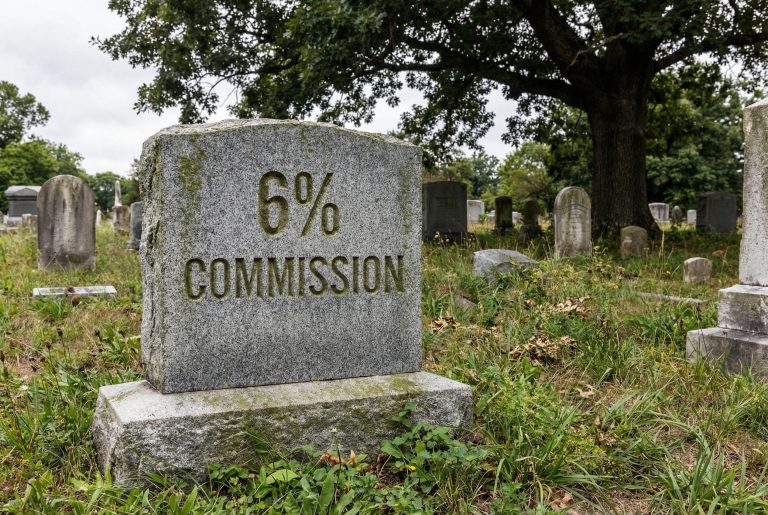
The elephant in the room is commission. At 5-6% of sale price, it’s by far the largest cost in most transactions. On a half-million-dollar home, we’re talking $25,000-$30,000 for roughly 20-40 hours of actual agent work. The hourly rate math gets uncomfortable quickly.
Here’s what that commission theoretically covers: listing preparation, professional photography, MLS input, showing coordination, offer negotiation, and transaction management through closing. These are valuable services. The question is whether they require five figures to deliver, or whether that’s simply what the market has historically accepted.
The Costs You Can Control
Commission is the most negotiable cost in any transaction. Traditional brokerages rarely advertise this, but commission rates aren’t set by law—they’re set by agreement between seller and agent. Every percentage point saved on a $523,000 sale keeps $5,230 in your pocket. That’s real money.
Flat fee brokerages have entered the Utah market offering full-service representation at dramatically lower costs. We’re talking $2,500-$5,000 flat fees versus $15,000-$30,000 in traditional commissions. The services are comparable: MLS listing, professional photography, offer negotiation, licensed agent support. The pricing model is just different.
The Costs You Can’t Control
Title insurance and escrow fees are relatively fixed. Utah’s rates are regulated, and shopping around yields minimal savings. Recording fees and transfer taxes are set by government entities. These costs are unavoidable, though they represent a much smaller portion of total transaction costs than commissions.
Mortgage payoff amounts are what they are—your remaining balance plus any prorated interest. Some loans carry prepayment penalties, though these have become less common. Check your loan documents or call your servicer to understand exactly what you owe.
Smart Strategies for Reducing Selling Costs
Start with the biggest number: commission. Interview multiple agents and explicitly discuss fees. Ask what services are included at different commission levels. Explore flat-fee options that deliver core services at fraction of traditional costs. Don’t assume the first rate quoted is the only rate available.
Handle reasonable repairs yourself when possible. A handyman charging $50/hour for basic work costs far less than leaving issues for buyers to negotiate after inspection. Clean and stage your own home if budget is tight—there are excellent resources online for DIY staging that achieves 80% of professional results at 10% of the cost.
The Hidden Cost Most Sellers Miss
Here’s what rarely gets discussed: the cost of overpricing. Homes that sit on market due to unrealistic pricing accumulate carrying costs—mortgage payments, utilities, insurance, maintenance—every month they don’t sell. More damaging, extended market time typically leads to final sale prices below what correct initial pricing would have achieved.
A home that sells in 30 days at $520,000 nets more than the same home selling at $515,000 after 90 days of price reductions, even before accounting for three months of carrying costs. Accurate pricing isn’t just strategy—it’s cost management.
Calculating Your True Net Proceeds
Before listing, run the real numbers. Start with expected sale price based on current comps—not aspirational pricing. Subtract your mortgage payoff. Subtract estimated commissions (and get quotes from flat-fee options). Subtract title, escrow, and closing costs. Subtract any planned preparation expenses. What remains is your realistic net proceeds.
If that number doesn’t work for your goals, you have three options: reduce costs (commission is the biggest lever), increase sale price (through strategic improvements or timing), or delay selling until the math improves. Running these numbers before listing prevents unpleasant surprises at closing.
The Bottom Line on Selling Costs
The true cost to sell a home in Utah is substantial, but it’s not fixed. Sellers who approach the transaction strategically—negotiating commissions, exploring flat-fee options, handling reasonable preparations themselves, and pricing accurately from day one—keep significantly more equity than those who accept default terms and hope for the best.
On a $523,000 sale, the difference between 6% commission and a $2,500 flat fee is nearly $29,000. That’s not a rounding error—that’s a year of mortgage payments, a car, a significant addition to retirement savings. The services that matter remain available. Only the pricing model changes.
Your equity is the result of years of payments and market appreciation. It deserves protection. Know your costs, explore your options, and make decisions that keep more of what you’ve built